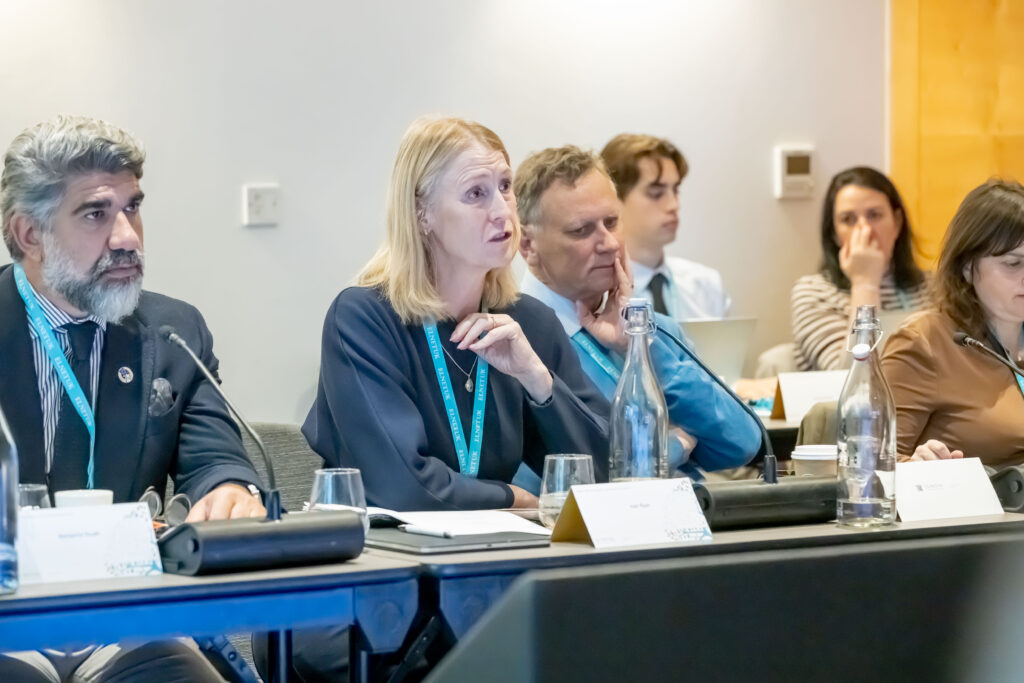
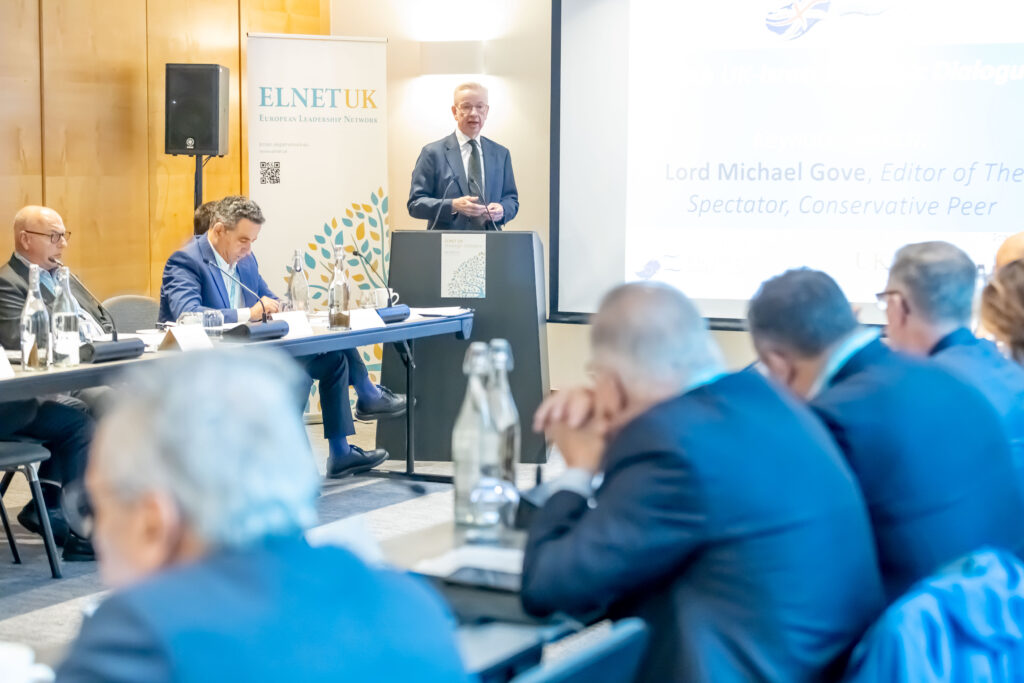
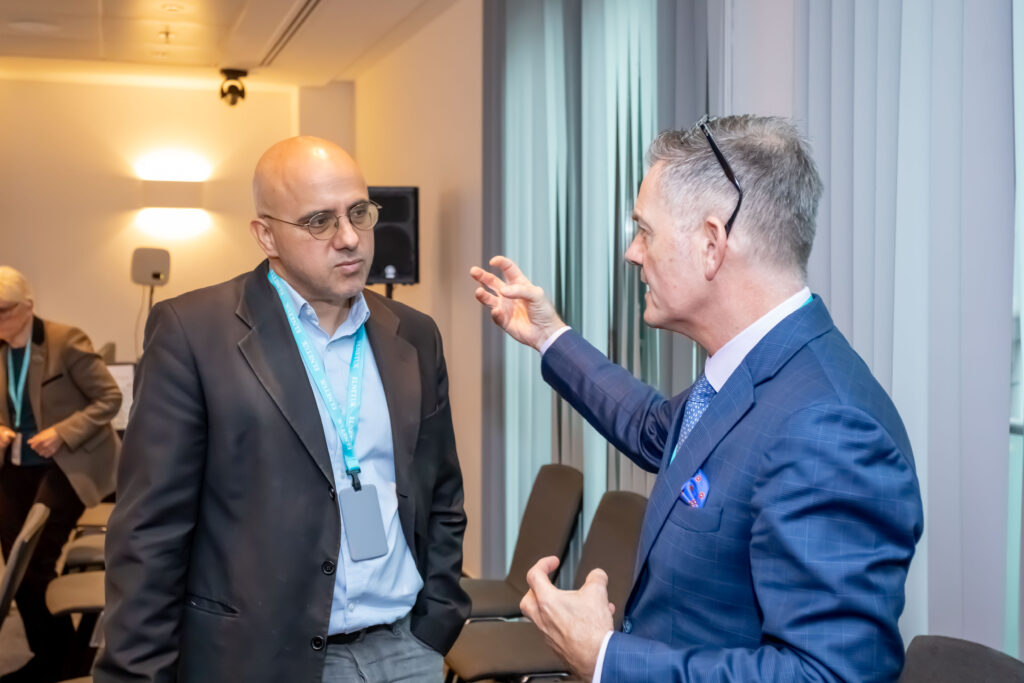
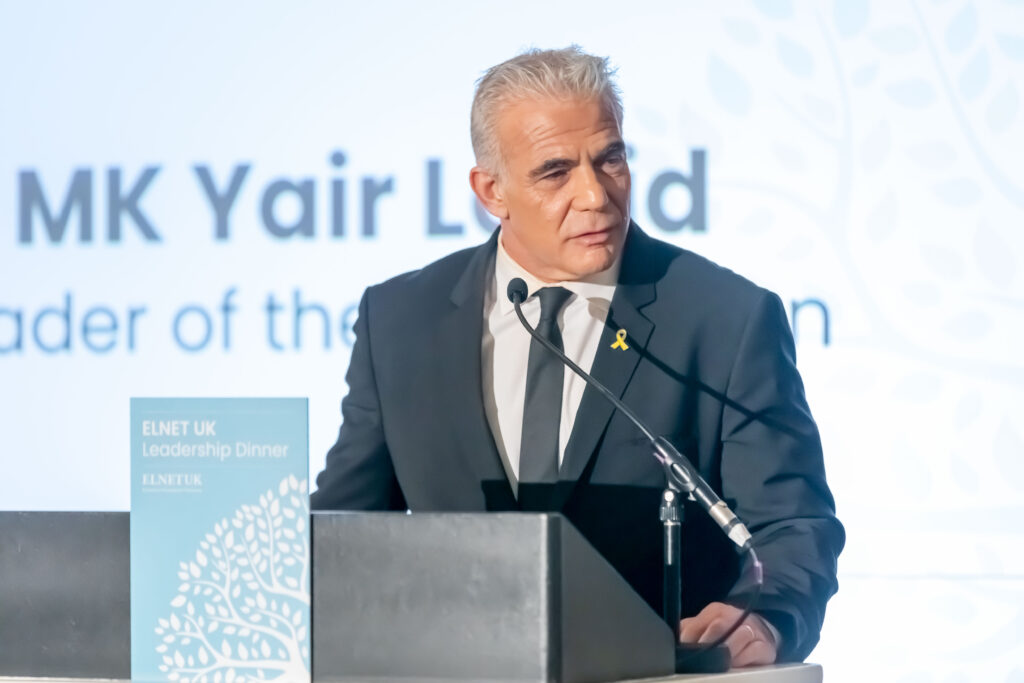
The European Leadership Network (ELNET) UK and ELNET’s Forum of Strategic Dialogue (FSD) brought together senior members of parliament and experts from the UK and Israel. The dialogue addressed the following topics: “Post-war regional developments in the Middle East”; “The future of the UK-Israel bilateral relationship”; “Common enemies – The Iranian threat”; and “The ‘Day After’ in Gaza and beyond”. The discussions were conducted strictly under the Chatham House Rule.
The forum included senior representatives and former advisers to ministry of foreign affairs, members of parliament, senior experts from think tanks, former and current diplomats, journalists, and civil society representatives from Israel and the UK.

Executive Summary:
Post-war regional developments in the Middle East
- The emergence of a Sunni-Islamist regime in Syria, with former jihadi commanders assuming military leadership, poses a huge threat to minorities (Alawites, Kurds, Druze) and challenges prospects for inclusive governance.
- Lebanon remains paralyzed by Hezbollah’s armed dominance, with the central government unable or unwilling to disarm the group due to fears of civil conflict and institutional weakness.
- Israel’s post-7 October 2023 doctrine has shifted decisively from deterrence to active threat removal, particularly toward Hezbollah and Iranian proxies. This has altered regional perceptions of Israel as a stabilizing force.
- There is a widespread loss of trust in UN institutions (UNIFIL, UNRWA), and Western powers remain largely reactive in their diplomacy.
- Opportunities exist for incremental, pragmatic cooperation—such as cross-border energy projects and formal border delineation—that could reduce tensions and weaken non-state actors.
The future of the UK-Israel bilateral relationship
- UK–Israel relations have suffered since October 7, with trade negotiations paused and new arms embargoes imposed.
- Despite tensions, Israel is still a crucial UK partner in technology, defence, and critical healthcare supplies.
- Israel’s economy and start-up sector have shown strong resilience, continuing to secure major international investments.
- Regional agreements like the Abraham Accords offer the UK and Israel new opportunities for economic and diplomatic collaboration.
- The ongoing conflict has spurred innovation in Israel, especially in fields like health technology and defence, which are valuable to the UK.
- High-level political relations between the UK and Israel have deteriorated, impacting communication and cooperation.
- There are deep divisions within the UK government about policy towards Israel, particularly regarding arms sales and diplomatic recognition.
- The UK continues to depend on Israeli intelligence and technological expertise for national security.
- Business and commercial ties between the two countries remain robust, even as political relations are strained.
- Both countries recognize the need to rebuild trust and broaden engagement to ensure mutual prosperity and security.

Common enemies – The Iranian threat
- Israel achieved tactical military successes against Iran, including targeting IRGC leadership, but did not change Iran’s strategic stance or regime.
- Iran will likely resume nuclear enrichment and is unwilling to compromise on its nuclear or ballistic missile programs in negotiations.
- The regime in Iran uses conflict with Israel to strengthen itself domestically and is not ready for real change.
- Iran continues to support regional proxies (like the Houthis in Yemen and actors in Iraq) to project power and threaten Israel.
- The next Iran-Israel conflict could be more severe and difficult to contain, as both sides remain deeply entrenched.
- Iran’s perception of the last conflict is that it was not militarily defeated, even though the regime feared domestic unrest and reinforced its internal security.
- Iranian ballistic missile capabilities are evolving, including cooperation with China and underground ballistic missile infrastructures.
- Iran’s hybrid warfare includes attacks on international journalists, information campaigns, and supplying drones to Russia.
- Economic and political conditions in Iran are strained, but the regime focuses on rebuilding, strengthening proxies, and preparing for future conflict rather than reform.
- The normalization process with Gulf states and their mediation could be crucial for regional stability and future US-Iran agreements, while Israel seeks closer ties with the Gulf to strengthen its regional position.
The ‘Day After’ in Gaza and beyond
- Disarmament of Hamas is widely seen as essential for any meaningful peace process, though scepticism remains about its feasibility.
- The two-state solution is still viewed as the only viable long-term path to peace, but it requires new and credible leadership on both sides.
- Recent polling indicates little enthusiasm among Palestinians for a state under current conditions.
- Top-down peace initiatives (like the Trump plan) are met with scepticism, particularly regarding prospects for Hamas disarmament.
- Progress in peace processes often occurs after periods of intense conflict, suggesting current tensions could eventually enable future breakthroughs.
- There is growing realization among Palestinians, especially in the West Bank, that armed struggle is ineffective.
- Tensions exist within Hamas and between Gaza’s population and its leadership, with increasing disappointment in current strategies.
- Gaza is likely to remain partitioned and isolated, with international pressure focusing on disarmament and humanitarian issues.
Conclusions and Recommendations
- It is vital to acknowledge and address the current tensions between the UK and Israel, especially following recent diplomatic developments and the October 7 events. The UK’s recent approach diverges from its traditional alignment with Israel and the US, raising concerns in Israel about trust and partnership. Our primary policy recommendation is to restore trust and foster open, honest discussion at all levels between the UK and Israel. Without addressing these underlying issues, further policy initiatives will lack credibility and sustainability.
- Rebuild UK–Israel Dialogue: Launch a dedicated UK–Israel Strategic Forum to facilitate regular high-level meetings, issue-based working groups, and joint crisis response protocols. Prioritize reestablishing ambassadorial and ministerial exchanges and create a bilateral task force to identify and resolve policy disagreements, ensuring UK influence in shaping Israel’s regional policies.
- Promote Realistic Regional Cooperation: Urge the UK to support regional projects only after consulting Israeli stakeholders, ensuring initiatives align with Israel’s security and practical needs.
- Advise the UK to focus on coalitions that address Israeli security and oppose unfair targeting of Israel in international forums.
- Strengthen UK–Israel intelligence-sharing and encourage the UK to openly support Israel’s right to self-defence while deepening regional security ties.
- Promote educational exchanges and joint cultural initiatives to rebuild trust and improve mutual understanding between the two countries.