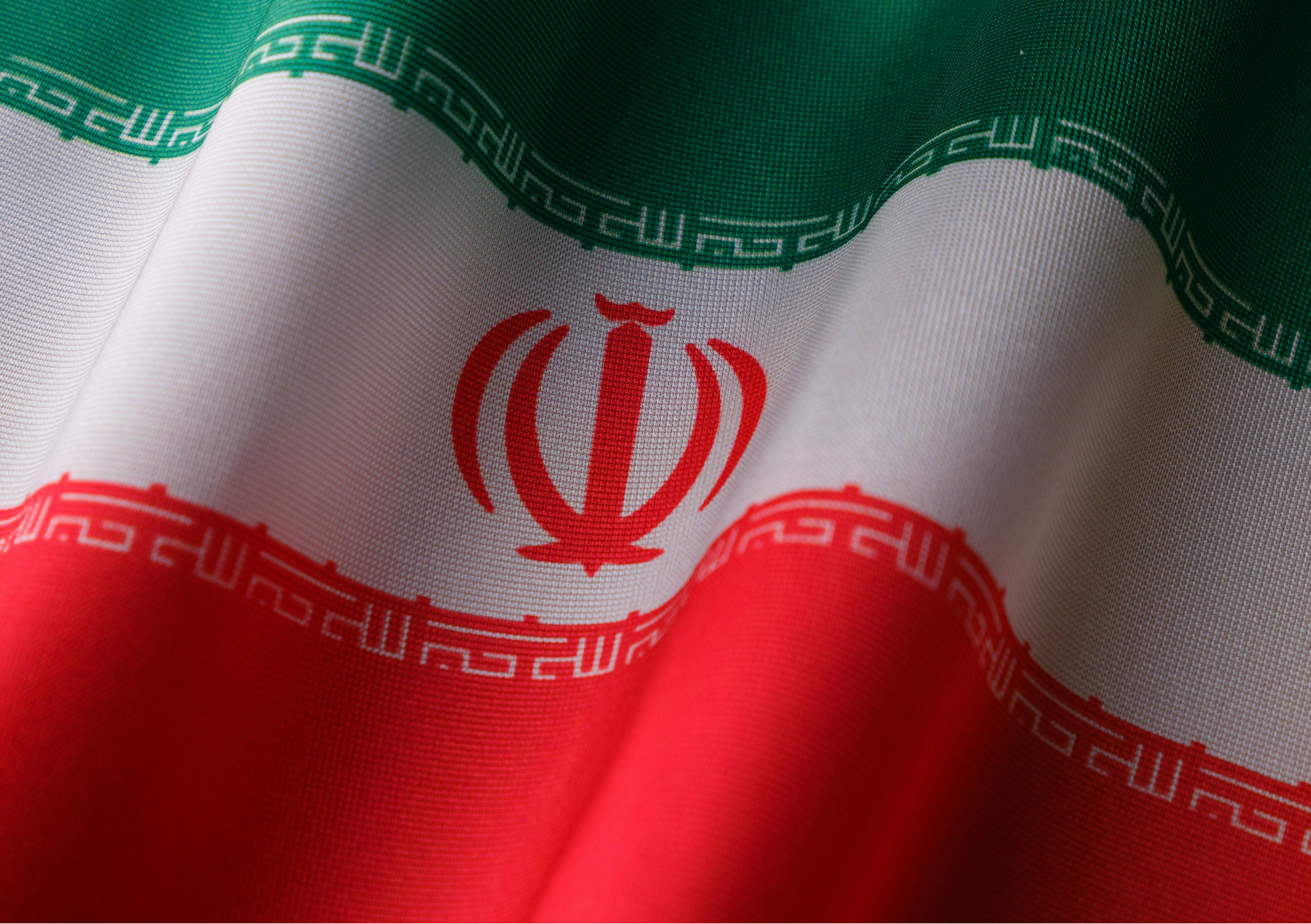
The war between with Iran is not merely a localized military confrontation but an event with broad strategic implications for the regional and international system. The Gulf states – Saudi Arabia, United Arab Emirates, Qatar, Oman, Bahrain and Kuwait – find themselves at the heart of the confrontation, even though they are not formal parties to it. Iranian attacks on civilian infrastructure, airports and energy facilities across the Gulf are reshaping regional threat perceptions and compelling these states to reassess their relations with Israel, the United States and additional international actors, including the European Union.
The war with Iran has placed the Gulf states at the heart of the conflict, whether they like it or not. The Gulf states were drawn into a war they had tried to prevent, out of fear of becoming targets of Iranian aggression. They opposed an attack on Iran not because they believed it was unjustified, but because they anticipated that the war would come at a cost to them. The war confronts Gulf leaders with a reality they had long anticipated and sought to avoid. Yet even under fire, the Gulf states are not rushing to openly align themselves with the front opposing Iran. The reason lies in a dual dilemma—one related to the credibility of the United States and the other to the ambiguity of the messages emanating from Tehran itself.
The first doubt concerns Washington. In the Gulf there is a deep concern that the United States may, sooner rather than later, choose to declare the war a success, claim that its objectives have been achieved, and reduce its involvement. The possibility that an American president—particularly Donald Trump—might declare “victory” and seek to end the campaign earlier than expected is viewed in the Gulf as a realistic scenario. From the perspective of Gulf leaders, this is a critical strategic question: what would be the point of taking public and forceful steps against Iran if, in the end, they were left alone to face a battered but vengeful Iranian regime? The cost of openly aligning with the United States and Israel could be significant, while the long-term American commitment is perceived as uncertain. In practice, Gulf states are acting below the threshold of open conflict with Iran and are undertaking a range of measures to assist the broader war effort, but not in an overt manner. Their actions—even those directed against Iranian interests—have not received formal public acknowledgment. The reason is forward-looking: in their view, it is important not to burn all bridges with Iran.
At the same time, the messages emerging from Tehran are not uniform. Gulf states are accustomed to conducting dialogue with Iran’s political centers of power—the president and the foreign minister—and in those channels they sometimes hear more moderate messages and even signals of openness to de-escalation. Yet far more forceful rhetoric also emerges from other parts of the Iranian system, particularly the Islamic Revolutionary Guard Corps, which emphasize continued pressure and the willingness to expand the confrontation. This contradiction partly reflects the damage inflicted by Israeli and American strikes on Iran’s command and control structures, but the conflicting messages make it difficult for Gulf governments to determine Tehran’s real line: whether Iran is pursuing sustained escalation or merely applying limited pressure.
The result is a paradoxical situation. Iran is employing force against Gulf states, yet this fact alone does not necessarily push them to openly join the camp confronting it. Instead, they continue to pursue risk-hedging strategies: strengthening the protection of their infrastructure, deepening security cooperation with partners, while simultaneously leaving the door open to dialogue with Tehran and avoiding steps that might push them into direct confrontation.
This pattern of risk hedging in the Gulf stems from their military vulnerability and, above all, their economic exposure. Gulf leaders understand that they face two sources of uncertainty: on the one hand, Iran, which retains the capability to inflict substantial damage; on the other, the United States, whose ultimate objectives in the conflict remain unclear. As long as this gap persists, Gulf states will likely continue to maneuver cautiously between the sides—contributing to efforts aimed at containing Iran, but without placing themselves at the forefront of the confrontation.
Over the past decades, Gulf states have adopted a strategy of risk hedging toward Iran. On the one hand, they have invested heavily in building advanced defensive capabilities, strengthening security ties with the United States, and deepening regional cooperation—including with Israel within the framework of the Abraham Accords. On the other hand, they have sought to maintain open communication channels with Iran in order to reduce the risk of direct confrontation and diminish Iranian incentives to target them. The current war is destabilizing this balance. Attacks on civilian infrastructure in Gulf states highlight that even countries not directly involved in the fighting are not immune to Iranian pressure, while at the same time intensifying fears of a wider regional escalation that could threaten their internal stability and economic prosperity.
Within this context, the question of the credibility of the American security umbrella is again coming to the forefront. Gulf states continue to view the United States as the central actor capable of guaranteeing their security, yet they are also aware of broader trends suggesting a gradual reduction of American engagement in the Middle East and the prioritization of strategic resources in other theatres. As a result, they are seeking to diversify their partnerships. Israel is perceived in this regard as a potential partner with significant technological and security advantages, particularly in the fields of missile defence, early warning and cyber capabilities. At the same time, such cooperation remains politically sensitive and publicly constrained, particularly in light of the ongoing tensions surrounding the Palestinian issue.
The war does not nullify the normalization processes that have developed under the Abraham Accords, but it does alter their pace and trajectory. In the short term, the period following the war may witness a certain public stagnation in relations between Israel and the Gulf states, as Arab governments must take into account internal pressures and regional public opinion. At the same time, however, a quieter process of deepening cooperation may unfold in the security and technological spheres. Iranian attacks have highlighted the need for regional coordination in air defence and in addressing the threat posed by missiles and drones. In this sense, the war could strengthen incentives to integrate regional detection, early warning and interception systems in cooperation with the United States.
The case of Saudi Arabia is particularly significant for the future of the regional system. Saudi Arabia views Iran as a central strategic challenge, yet it also seeks to avoid sliding into a direct confrontation. The war underscores for the Saudi leadership the importance of regional cooperation in addressing the Iranian threat, while simultaneously making public progress toward full normalization with Israel more politically difficult due to fears of Iranian retaliation. Under these circumstances, a plausible scenario is the continuation of quiet contacts and unofficial cooperation, alongside the postponement of a large-scale diplomatic breakthrough until the regional situation stabilizes.
The future of relations with Israel will depend not only on how the war concludes but also on broader issues beyond the conflict itself, some related to the existing gaps in positions between the sides. If the Iranian regime remains in power at the end of the war, the Gulf states may be encouraged to return to a policy of balancing the major regional powers. They are unlikely to favour a regional order in which Israel is perceived as a dominant actor and may seek to counterbalance this through closer cooperation with countries such as Pakistan or even Turkey. Moreover, a narrative could emerge portraying Israel as a driver of the war and therefore partially responsible for the consequences suffered by the Gulf states:
- Shifts in the regional power balance. The war has highlighted Israel’s military-technological superiority and shifted the regional balance of power in its favour. At the same time, it has underscored the depth of strategic ties between Israel and the United States, reflected in close coordination and significant cooperation during the conflict. This combination may strengthen Israel’s image as a uniquely capable actor and, accordingly, an attractive partner. However, unlike the Gulf states, Israel is geographically distant from Iran and may accept, or even prefer, a degree of instability there, whereas the Gulf states fear that such instability could undermine their security and regional stability.
- Potential for security cooperation. The war with Iran has also showcased Israel’s advantages in missile defence, early warning systems, and cyber defence, capabilities that are likely to attract interest from Gulf states facing similar threats. Nevertheless, overt cooperation with Israel remains sensitive, particularly given Israeli policy on the Palestinian issue. As a result, the factors that strained relations before the war are likely to continue influencing them afterward. Furthermore, if Iran is perceived as less threatening at the war’s end, the Gulf states’ motivation to pursue close security ties with Israel may diminish.
The implications of the current war extend far beyond the Middle East. For the European Union, stability in the Gulf has become a central strategic concern in recent years, particularly following the reduction of dependence on Russian energy. Europe has increased its imports of oil and gas from Gulf states, and therefore any damage to regional energy infrastructure or threats to shipping routes in the Persian Gulf and the Strait of Hormuz directly affect its energy security. Rising energy prices and disruptions to supply chains could in the short term place additional strain on the European economy, which is already coping with inflationary pressures, industrial slowdown and the gradual transition toward renewable energy sources.
In the longer term, Europe may also find opportunities for economic and strategic cooperation with the region in the emerging reality. Infrastructure projects, transportation corridors and energy initiatives could connect the Gulf, Israel and the Mediterranean, creating new routes for the movement of energy and goods between Asia and Europe. Such connections could strengthen the resilience of European economies to geopolitical shocks and reduce dependence on vulnerable trade routes.
Nevertheless, the risks remain substantial. A prolonged escalation with Iran could lead to widespread damage to civilian infrastructure and energy systems across the region. An American withdrawal or ambiguity regarding Washington’s commitment to Gulf security could encourage regional states to seek new arrangements with Iran, even at the cost of distancing themselves from cooperation with Israel. In addition, continued instability in the Palestinian arena could further complicate the ability of Arab governments to justify public cooperation with Israel.
Looking ahead, the future of relations between Israel, the Gulf states, the United States and Europe will largely depend on how the current war ends. The collapse of the Iranian regime could lead to deeper security and economic cooperation and possibly to an expansion of normalization processes. By contrast, a prolonged war or the survival of the Iranian regime could encourage Gulf states to revert to a strategy of balancing among regional powers and to reduce the scope of their cooperation with Israel.
In recent years, Europe has increasingly recognized that the Gulf constitutes a central arena with direct implications for the continent’s economy, security and stability. This is not only due to Europe’s need to ensure stable and affordable energy supplies in the context of the war in Ukraine, but also because the region is perceived as a geopolitical crossroads filled with risks and opportunities. In light of the possibility that the United States may gradually distance itself from the region, as well as the growing influence of China and internal challenges within Gulf states, Europe is seeking to redefine its role. Yet it has so far struggled to formulate a clear strategy or to fully realize the potential embedded in its relationships with the Gulf states.
Europe and the Gulf states thus find themselves at a crossroads. For Gulf countries, Europe offers significant economic and technological potential, but it is widely perceived as weak in security terms—a perception that has been reinforced during the current confrontation with Iran. In this sense, the present war is not only a test of the balance of power between Israel and Iran, but also a decisive moment in shaping a new regional architecture—one that will influence not only the security of the Middle East but also the economic and energy stability of the European continent.