Bearing Witness in IsraelSince October 7, 2023
In the days and weeks that followed the Hamas attack of 7 October 2023, ELNET began bringing European policymakers, parliamentarians, journalists and opinion leaders to Israel on emergency solidarity missions — to hear first-hand testimony, to stand in the communities that were attacked, to be briefed by Israeli officials and experts, and to carry what they had seen back to their own parliaments, governments and publics.
Understanding That Comes From Standing ThereThe difference between following the news and meeting the people
- Emergency programme
- Launched October 2023
- Policymakers and opinion leaders
- Europe-wide
ELNET launched the Solidarity Missions on a straightforward premise. As doubt and scepticism about the events of 7 October began to surface in parts of the media and of public debate, European decision-makers needed to be able to speak from direct knowledge rather than from coverage alone.
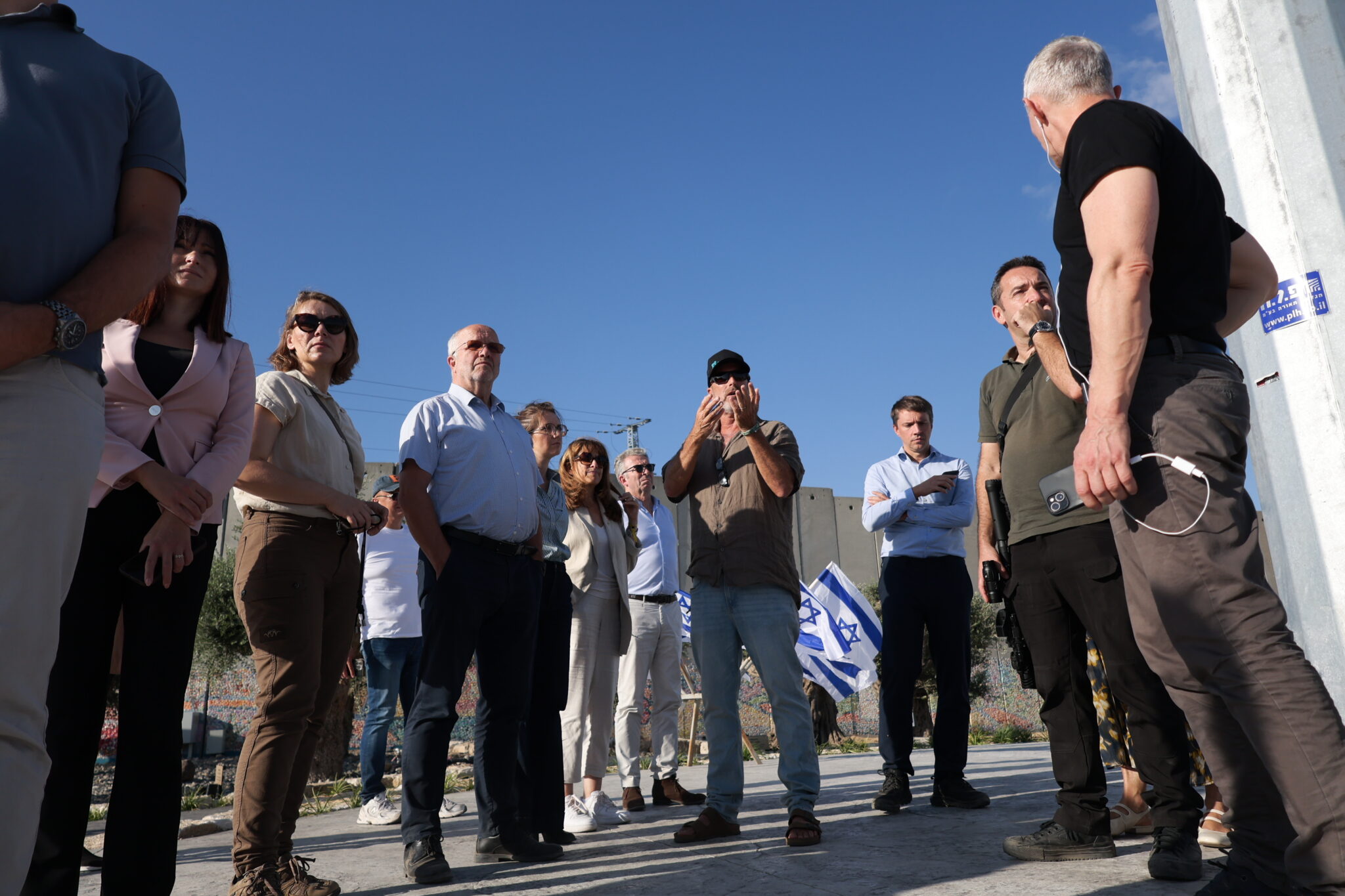
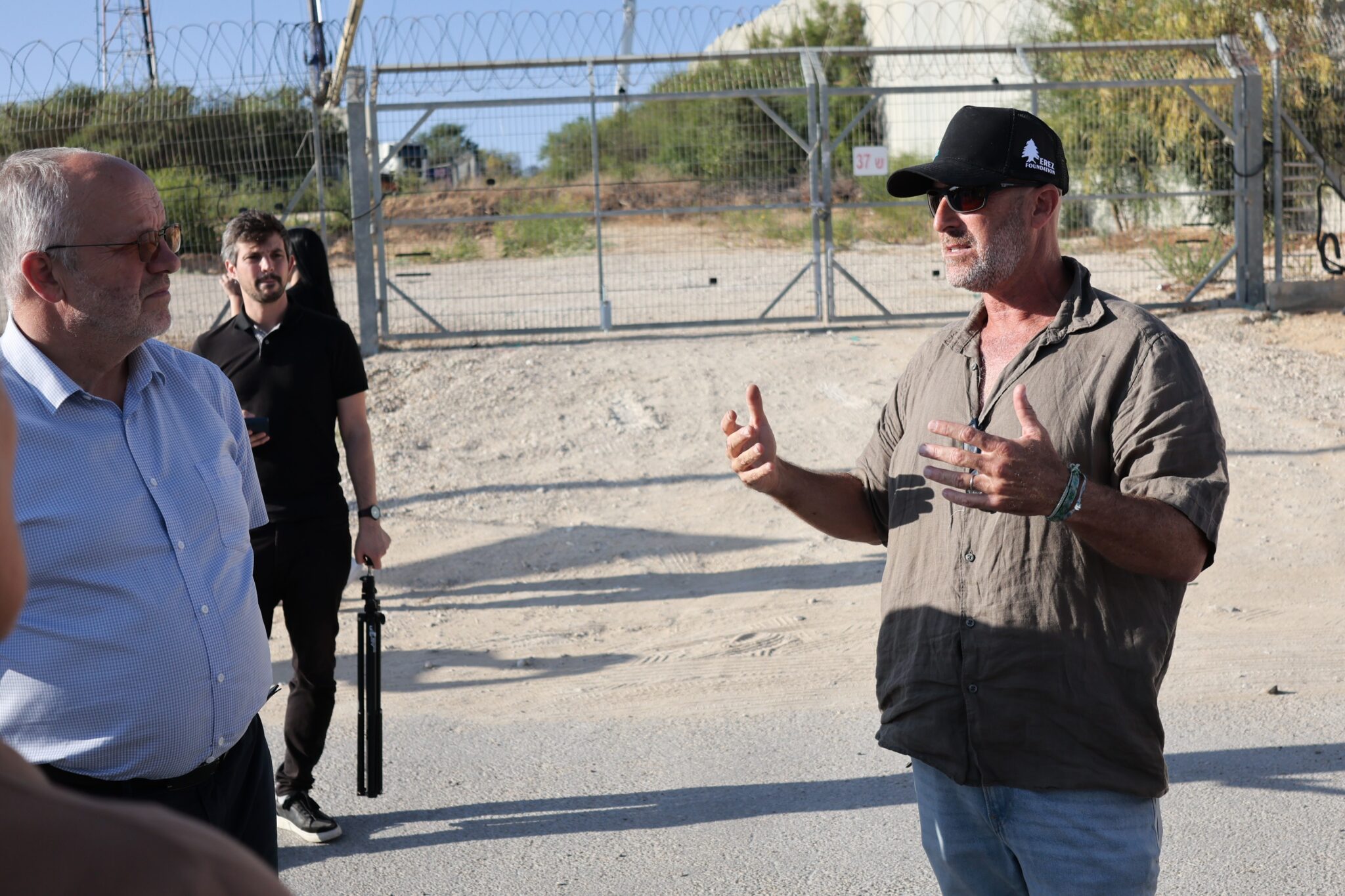
Delegates were not briefed from a distance. They walked through communities that had been attacked, met families of hostages held in Gaza, sat with survivors and with the wounded, and were briefed by the Israeli police officers, military officials and civil servants who had responded on the day itself.
ELNET’s stated aim was to help ensure that Europe’s military and diplomatic support for Israel remained informed and steady, and that European leaders continued to acknowledge publicly what had taken place. The organisation described the programme as being devoted to exposing the truth about the attack — a moral question, and also a security one, because Israel’s ability to defend itself depended on sustained international understanding.
“It takes a great deal of courage to stand with us. I read about the reactions received by courageous leaders who express their support for Israel’s right to defend itself. But in the future, when you look back, you will be proud to have stood on the right side of history.”
Amir Ohana, Speaker of the Knesset, addressing an ELNET delegation, November 2023
Southern Israel, the Knesset, the HospitalsItineraries differed from mission to mission — no single delegation saw everything described here
- Affected communities
- Hostage families
- Security briefings
- Political meetings
- Hospitals
Programmes were built around three things that cannot be replicated at a distance: the places where the attack happened, the people it happened to, and the officials responsible for what came next.
Locations and institutions visited across the missions
- Shura army base
- Kfar Aza
- Kibbutz Be’eri
- Sderot
- The Nova festival site at Re’im
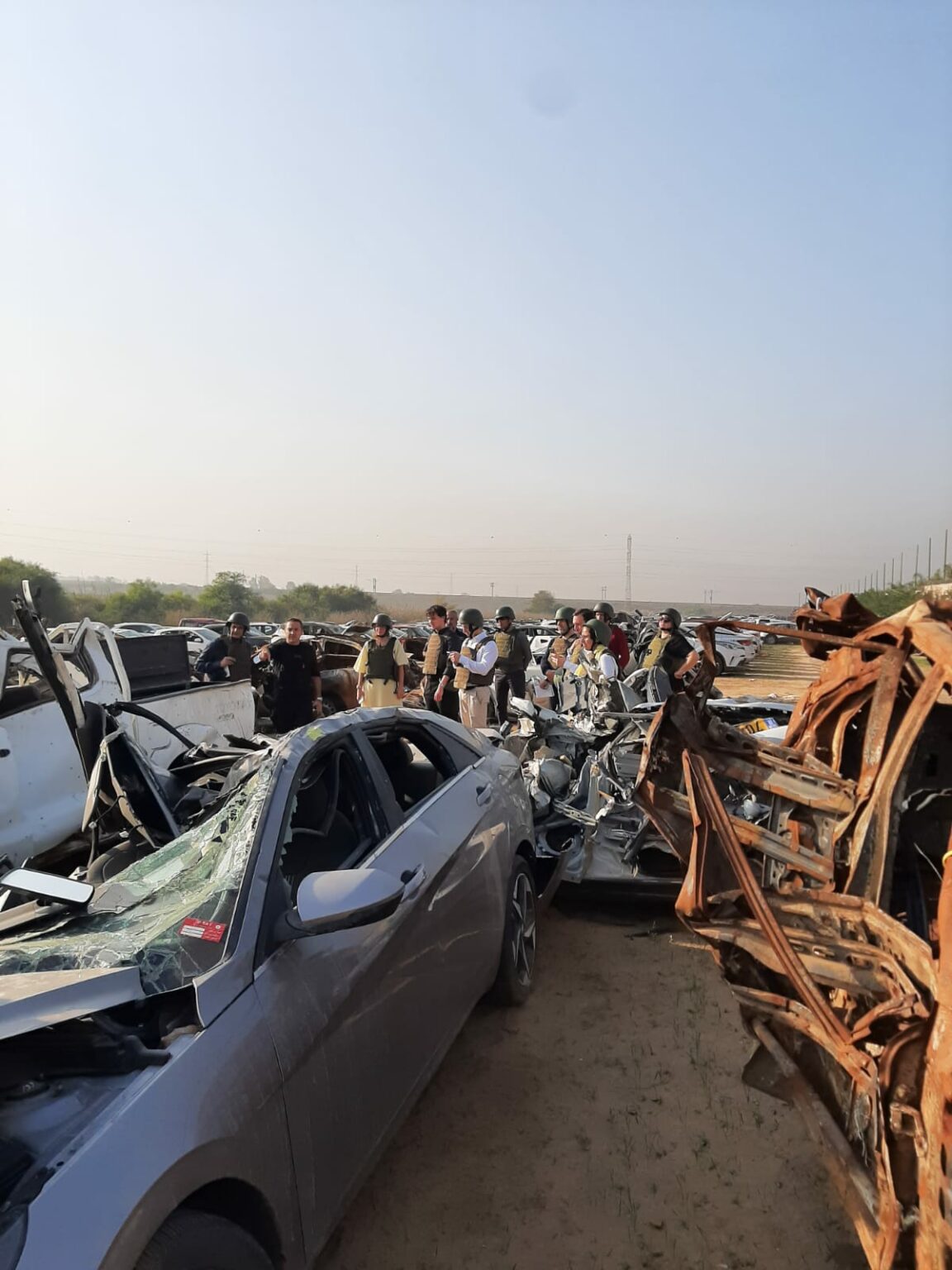
- The “car cemetery”
- Erez border crossing
- Ichilov Hospital, Tel Aviv
- Sheba Rehabilitation Center
- The Knesset
- Ministry of Defense HQ
- Ministry of Foreign Affairs
- National Security Council
- Museum of Tolerance, Jerusalem
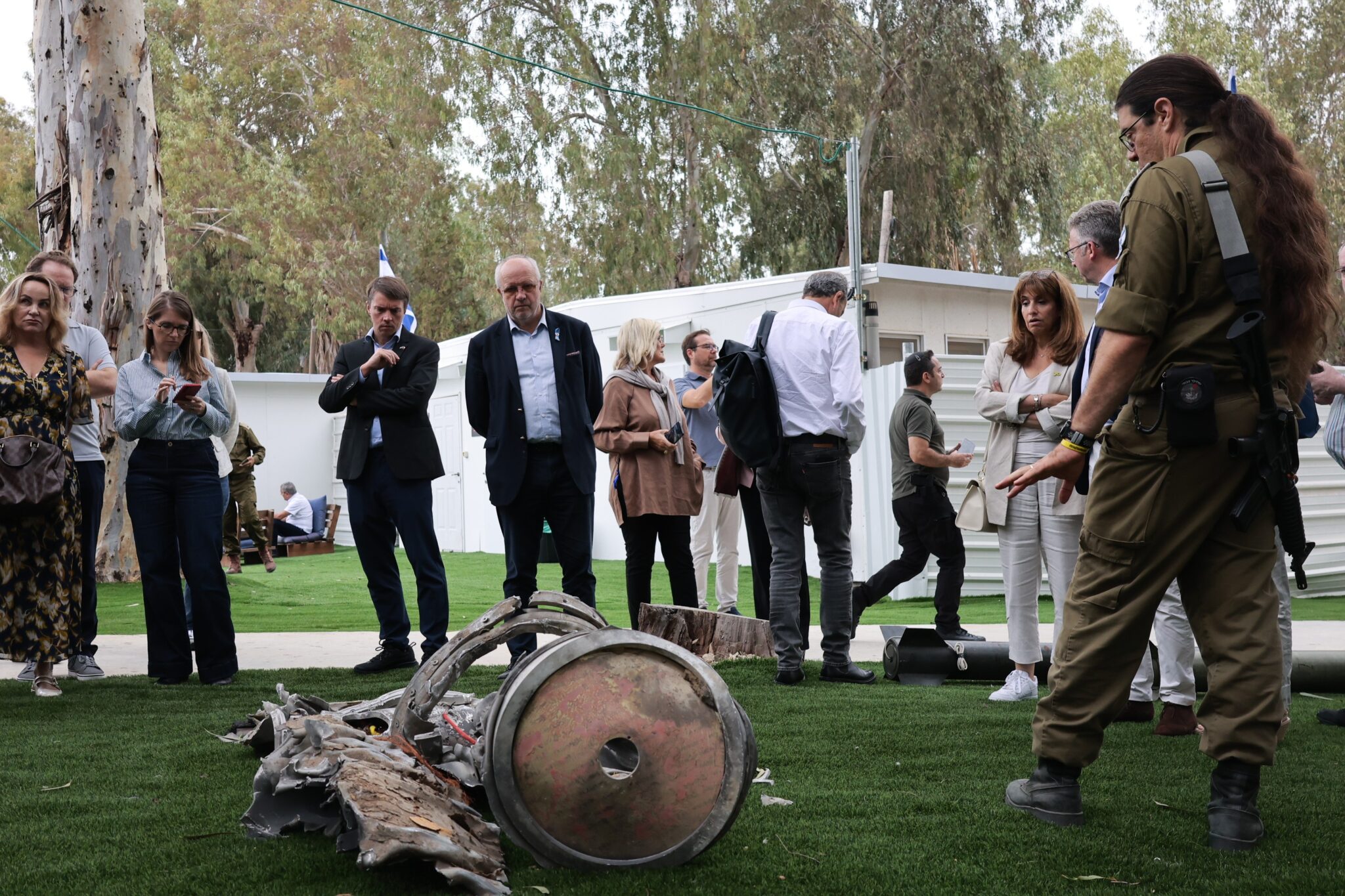
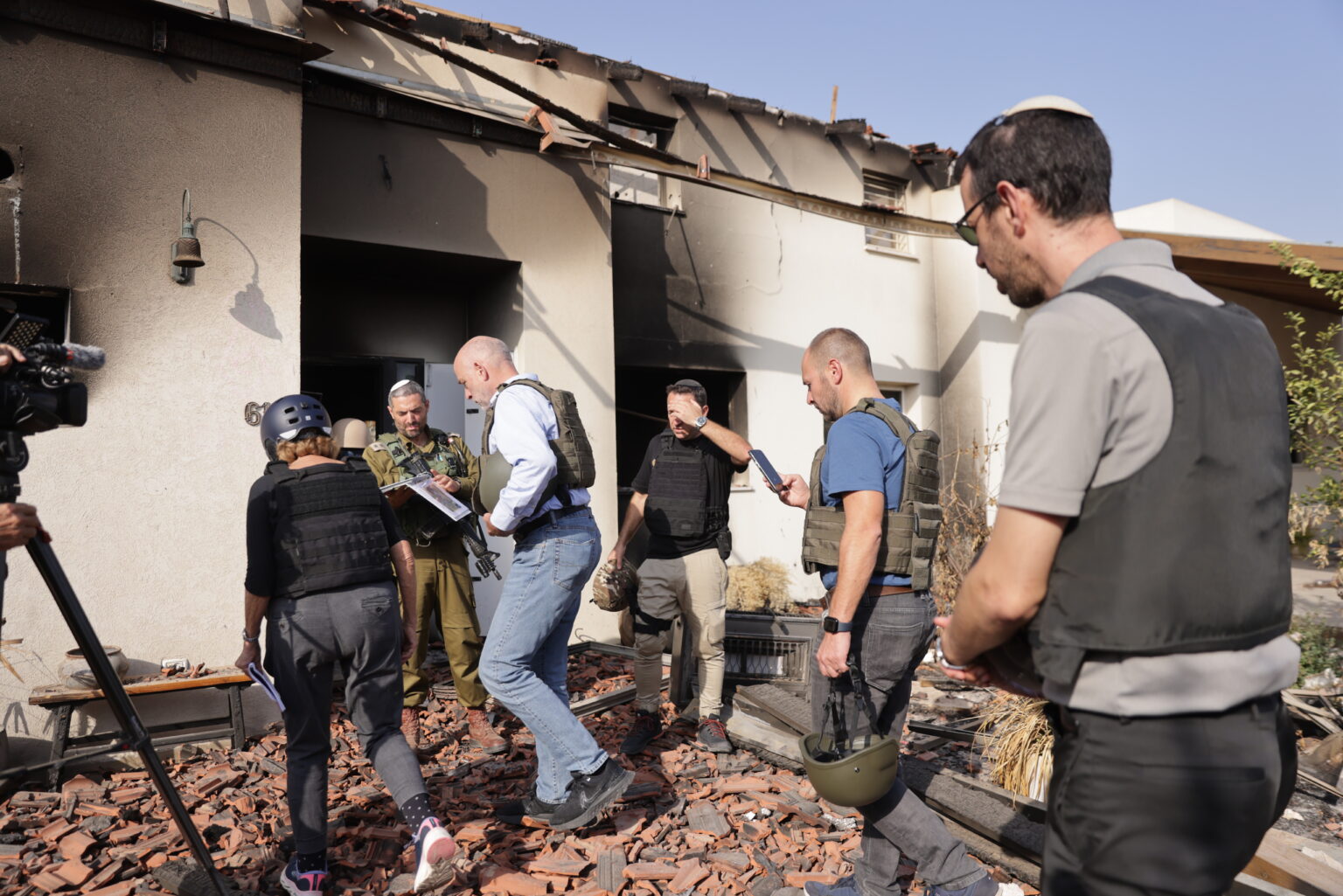

In southern Israel delegations were taken to the Shura base, where the remains of victims were still being identified weeks after the attack, and to kibbutzim including Kfar Aza and Be’eri. On one October 2023 mission the group had to be redirected away from Kfar Aza because of ongoing threats, and a rocket fired from Gaza landed in an open field a few hundred metres from the delegates as they travelled.
In Sderot delegations met the municipality and were shown raw footage of the infiltration. Several missions were briefed by Col. (Res.) Golan Wach, head of the Israeli National Rescue Unit, and by Superintendent Micky Rosenfeld of the Israel Police International Cooperation Unit, whose force was the first to respond on the morning of 7 October.
Delegations also met the families of hostages held in Gaza, and in several cases returned home only for events to overtake them: hours after one French delegation met the family of the French hostage Mia Schem, footage of her wounded in captivity was released.
In Tel Aviv, delegates visited wounded civilians and soldiers at Ichilov Hospital and were briefed on the emergency response, including at the hospital helipad. Later missions visited the Sheba Rehabilitation Center, where soldiers were recovering, and the ARC Innovation Centre at Sheba.
Decision-Makers, Not Delegations of ObserversServing parliamentarians, former heads of government, officials, journalists and authors
- National parliaments
- European Parliament
- State parliaments
- Government agencies
- Press
The missions were designed around people whose understanding would be tested in public: legislators who would go on to vote and speak, officials who would advise, and journalists and writers whose accounts would reach far beyond the delegation itself.
Categories of participant across the programme
- Members of national parliaments
- Members of the European Parliament
- Former heads of government
- Ministers and government officials
- State and regional parliamentarians
- Journalists and editors
- Authors and opinion leaders
- Police, military and cyber experts
- Civil-society representatives
Among the participants publicly documented by ELNET were former French Prime Minister Manuel Valls, who joined the first French parliamentary mission in October 2023; the French MPs Benjamin Haddad and Caroline Yadan; the British politician Lord Peter Mandelson, who led a 22-member pan-European parliamentary delegation in January 2024; the UK MP Andrew Percy; and the French author Bernard-Henri Lévy, the first European opinion leader to travel to Israel on an ELNET-facilitated solidarity trip.
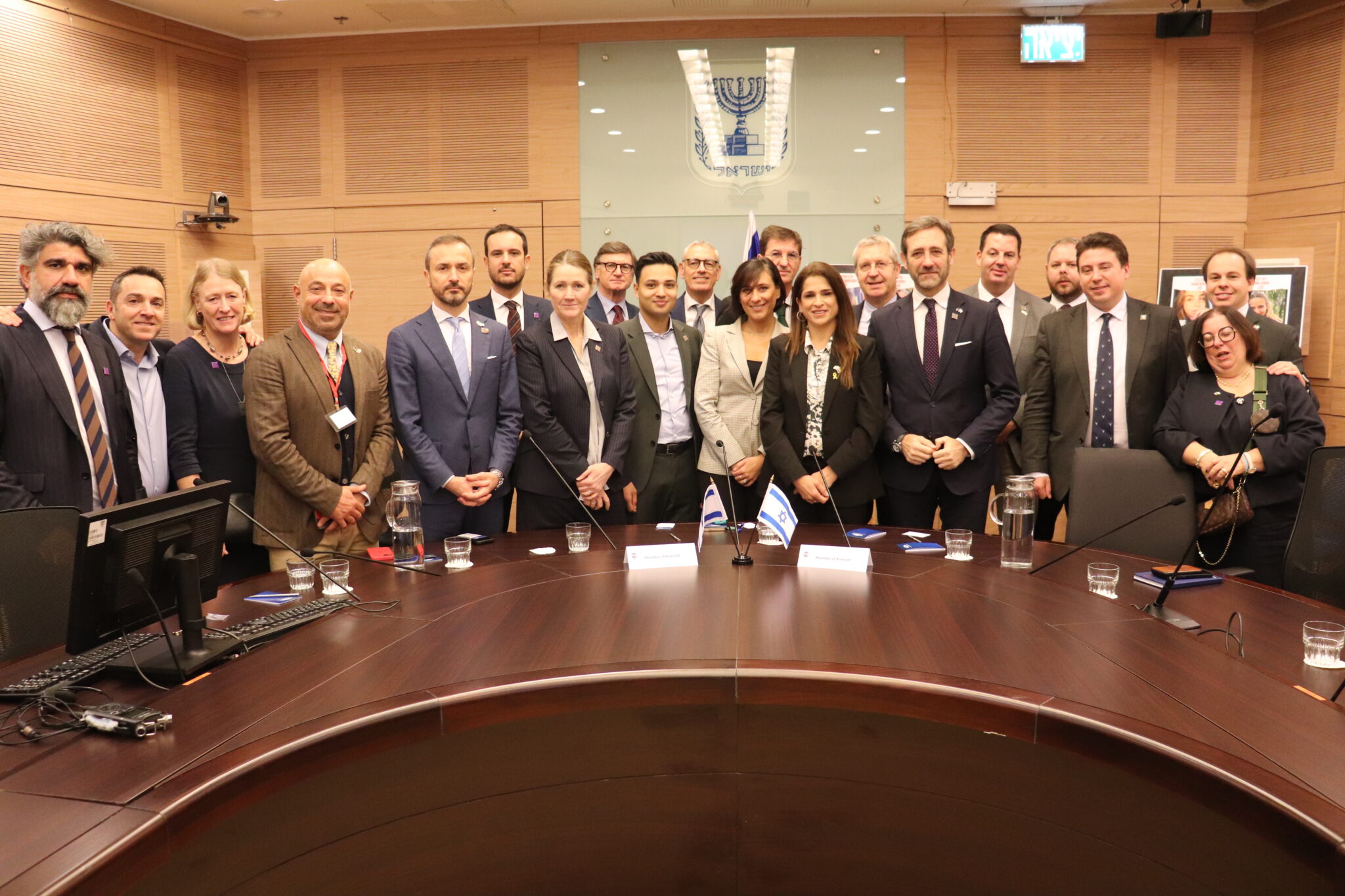
Delegations were deliberately cross-party and cross-national. A single October 2023 mission brought together 17 members of seven European parliaments and of the European Parliament; a January 2024 mission brought 22 lawmakers from ten countries together with two journalists; a February 2024 mission brought 17 members of parliament from six countries with three journalists and the chief executives of ELNET-UK and ELNET-Italy.
- Austria
- Belgium
- Bulgaria
- Croatia
- Cyprus
- Czech Republic
- Denmark
- France
- Germany
- Greece
- Hungary
- Iceland
- Italy
- Latvia
- Lithuania
- Netherlands
- Poland
- Portugal
- Romania
- Slovakia
- Slovenia
- Spain
- United Kingdom
In December 2023 ELNET-Italy, weeks after its launch, brought a delegation of ten Italians including members of both the Chamber of Deputies and the Senate together with leading journalists. In April 2024 a joint delegation of British and German state parliamentarians combined security briefings with visits to the Erez crossing and Kfar Aza, a cyber dialogue with experts from Israel, Germany, the UK, Spain and Norway, and meetings on municipal resilience and innovation.
What ELNET Made PossibleThe access, the logistics and the strategic framing that turn a visit into understanding
- Convening power
- Institutional access
- Expert briefings
- Follow-up in Europe
The value of a mission lies in who a delegation can actually meet. ELNET’s contribution was to open doors that would otherwise have stayed closed, in a country at war, and to give delegates the strategic context to interpret what they were shown.
Convening influential Europeans. ELNET assembled cross-party groups of serving legislators, former ministers, officials and writers from across the continent, and repeated the exercise mission after mission through 2023 and 2024 rather than as a single gesture.
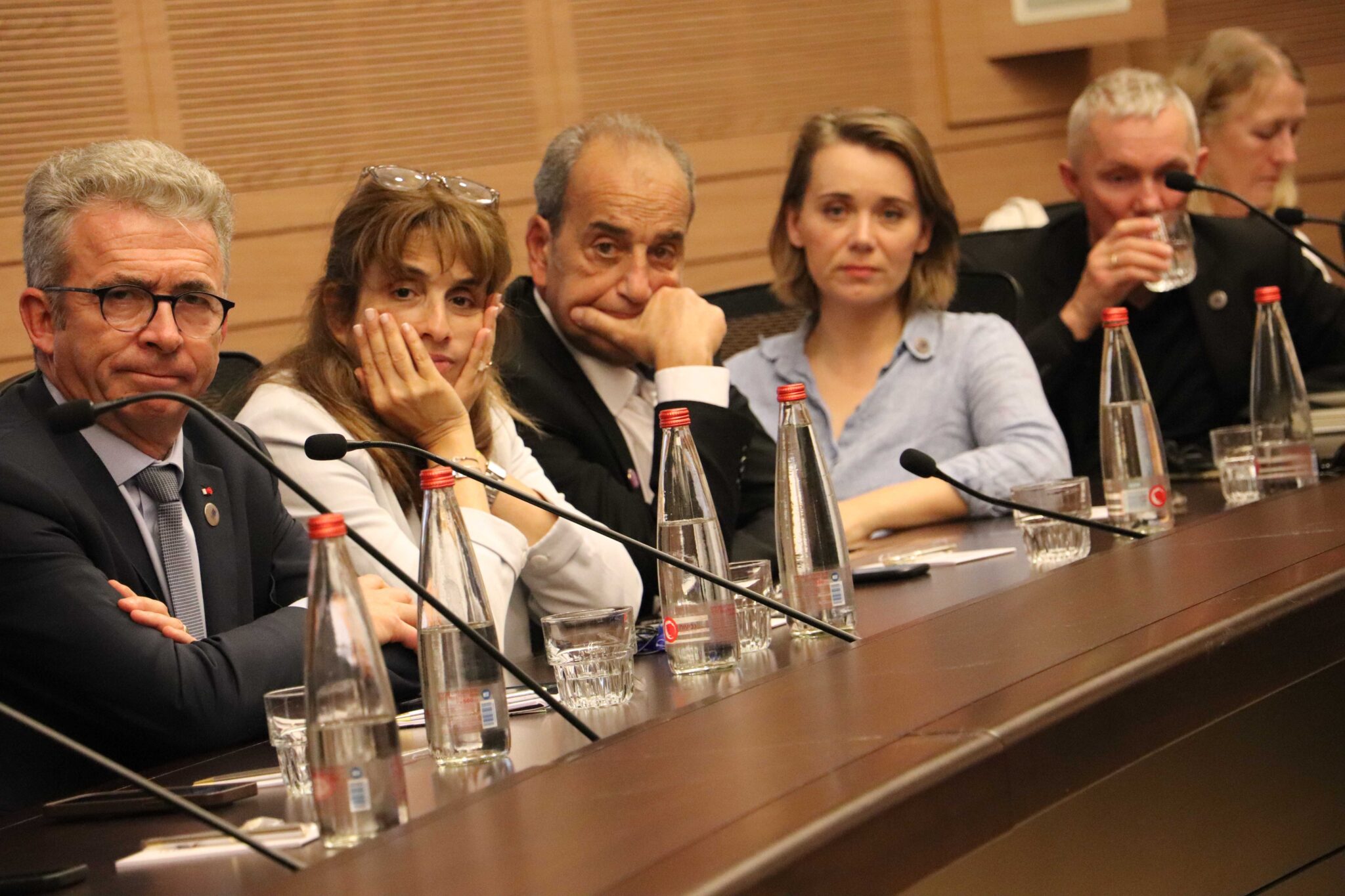
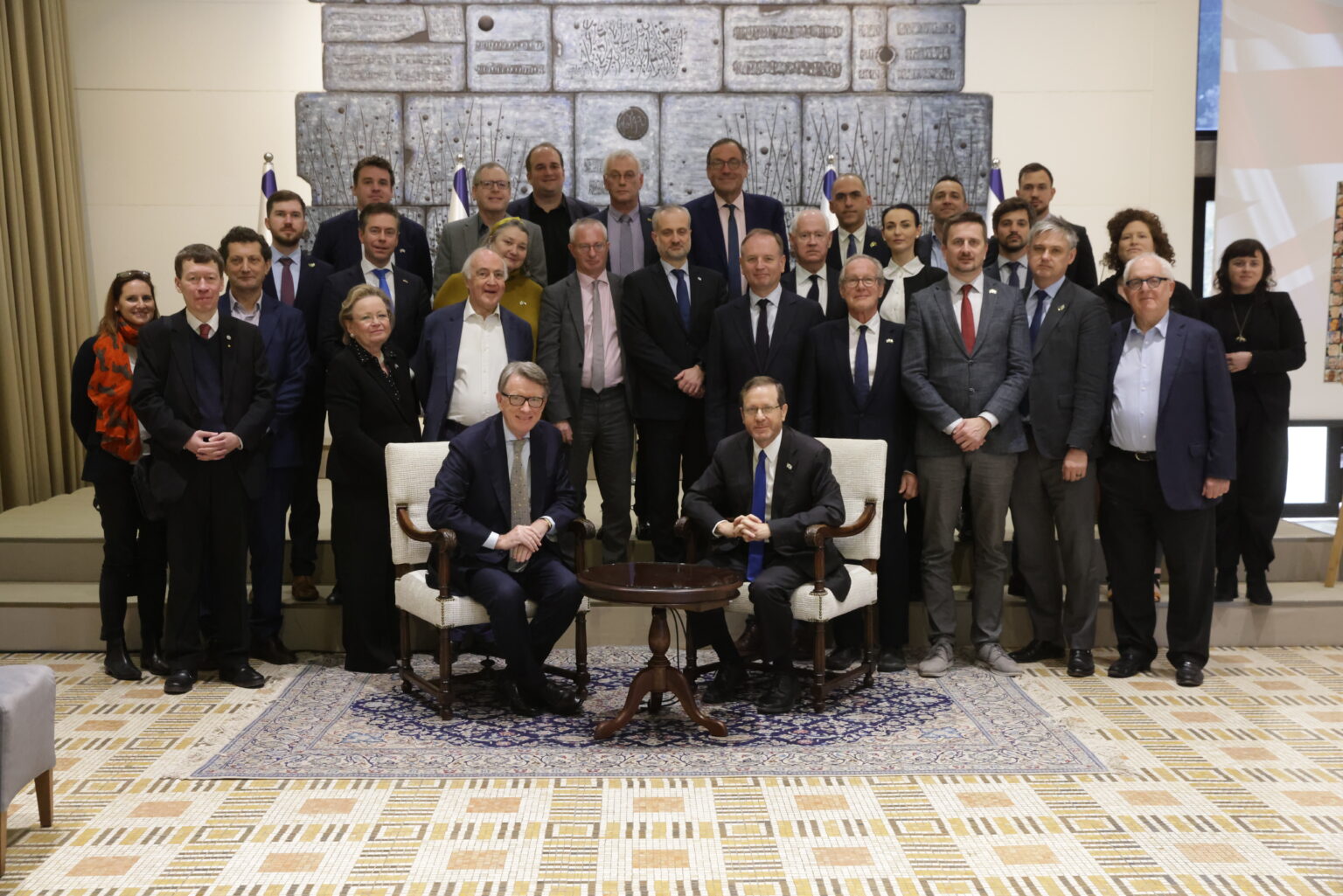
Providing meaningful access. Delegations were received at the Knesset by the Speaker, Amir Ohana, and by the chair of the Foreign Affairs and Defense Committee, Yuli Edelstein, and by members from both coalition and opposition. Missions were briefed at the Ministry of Defense headquarters, at the Ministry of Foreign Affairs by Deputy Directors General Josh Zarka and Daniel Meron and by Ambassador Emmanuel Nahshon, and at Israel’s National Security Council. One January 2024 delegation met President Isaac Herzog and Minister Gideon Sa’ar.
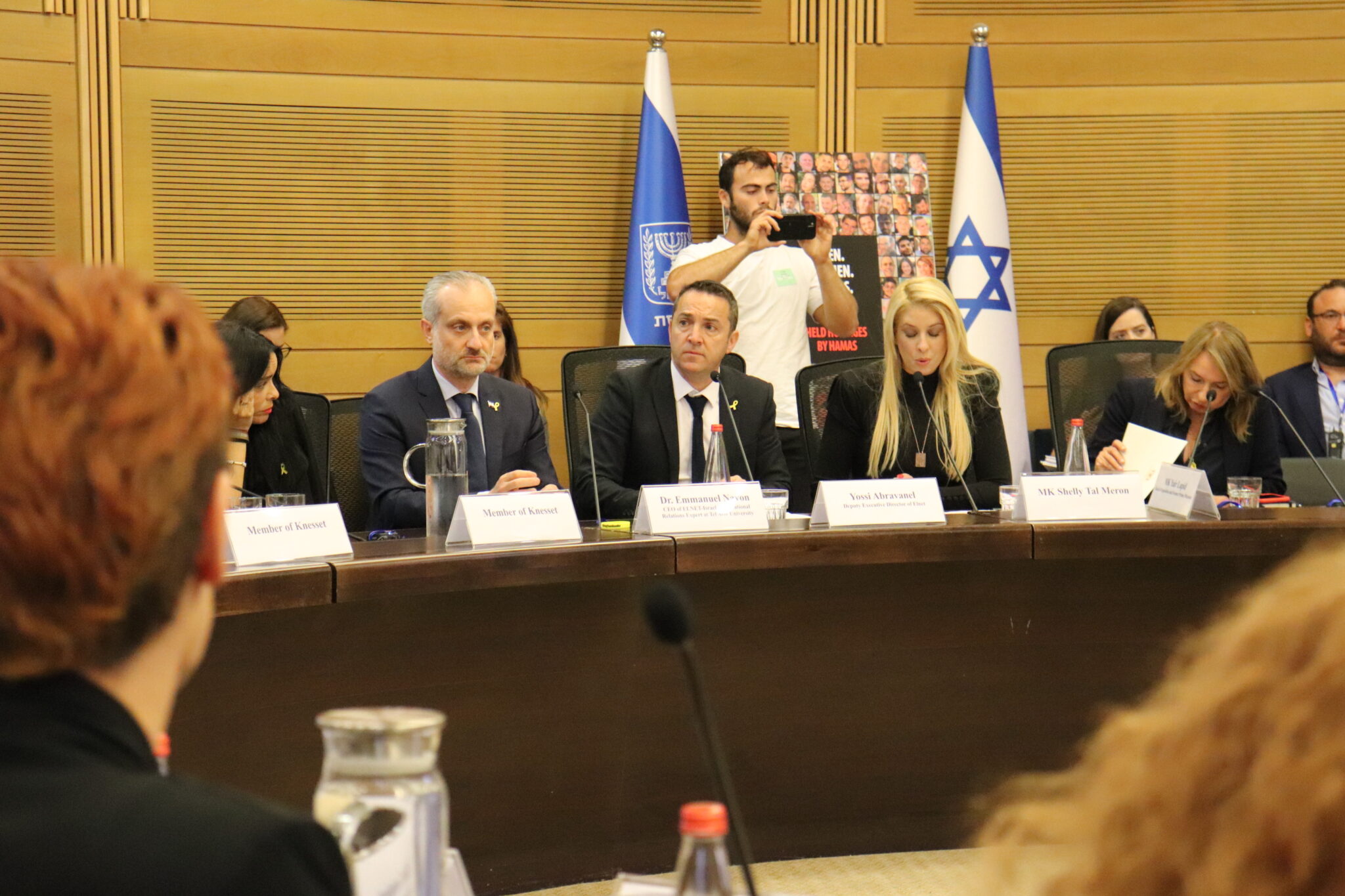
Facilitating direct encounters. ELNET arranged the meetings with hostage families, with survivors, with bereaved relatives such as the Mellanox founder Eyal Waldman, whose daughter Danielle and her boyfriend were murdered at the Nova festival, and with residents and first responders in the affected communities.
Providing strategic context. Alongside the site visits, delegates received expert briefings from Lt. Col. (Res.) Peter Lerner, Col. (Res.) Reuven Ben Shalom, the former IDF spokesperson Arye Shalicar, Superintendent Micky Rosenfeld, and ELNET-Israel’s Chief Executive Dr. Emmanuel Navon, together with sessions with organisations working on incitement in Palestinian educational material.
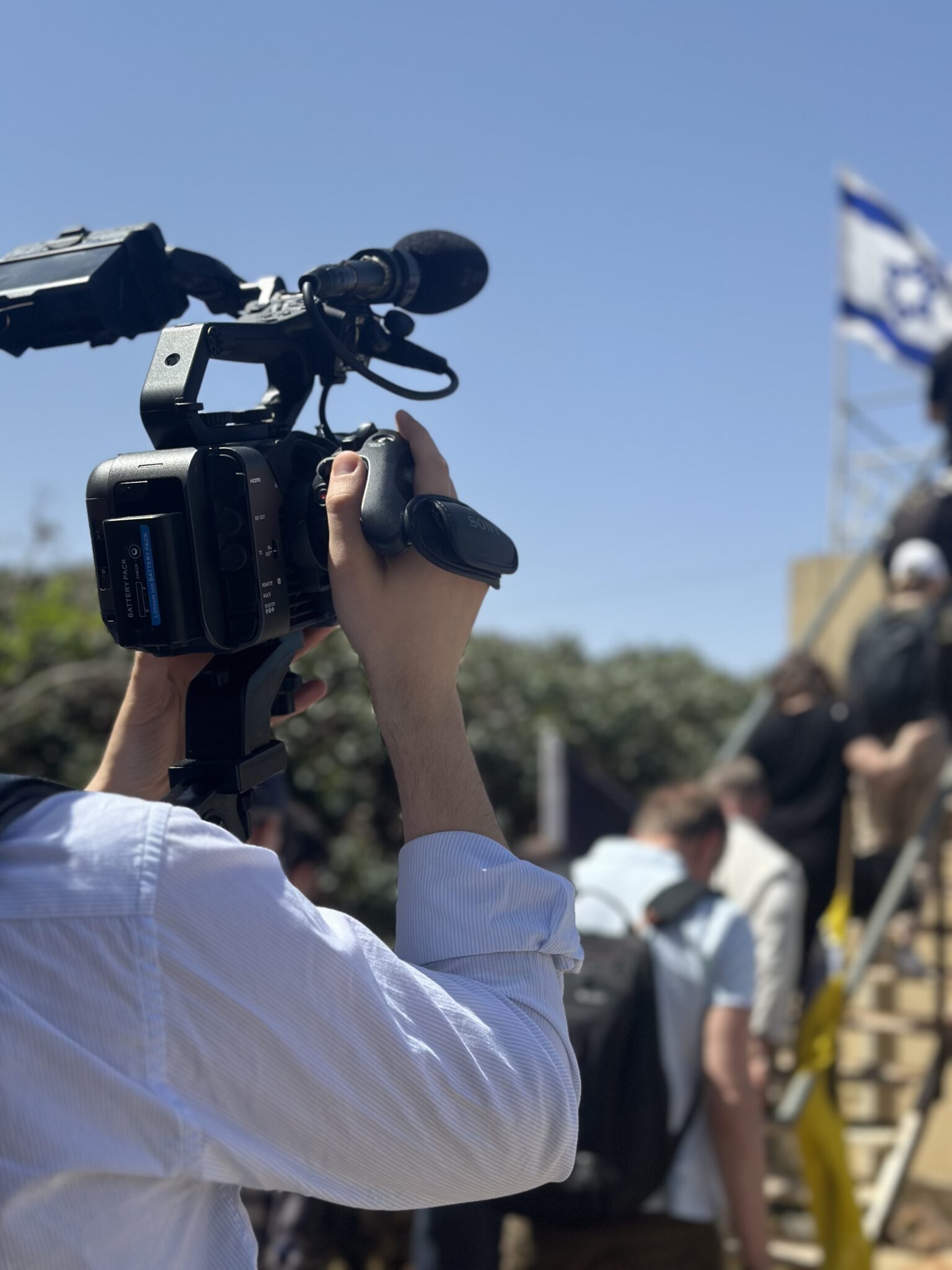
The clearest single example. Bernard-Henri Lévy was the first European opinion leader to travel to Israel after the attack, arriving within the first 48 hours on a trip ELNET facilitated. ELNET arranged his meetings and briefings, including with President Isaac Herzog, and obtained military clearance that had not at that point been granted to any other non-military personnel in order to escort him safely to the south, where he saw Sderot and entered Kfar Aza while the area was still being cleared.
Enabling informed dialogue afterwards. ELNET’s affiliate offices across Europe continued the conversation with participants once they were home, connecting first-hand experience to the policy debates, parliamentary business and media discussions taking place in their own capitals.
What Happened When Participants Went HomePublished testimony, parliamentary initiative, media engagement and new coalitions
- Op-eds and interviews
- Parliamentary conferences
- International coalitions
- National press coverage
A mission is only the beginning. The measurable effect of the programme lies in what participants said, wrote and initiated after returning to their own institutions.
Published testimony. Bernard-Henri Lévy wrote an op-ed in The Wall Street Journal on his return from the ELNET-facilitated trip. He went on to publish a book drawing on that visit and on his conversations with those directly affected, released in French, English and other editions. Read ELNET’s note on the op-ed.
Media engagement. The Times of Israel reported from Kfar Aza with the French parliamentary delegation, whose members said the scenes recalled the 2015 Paris attacks. The Jerusalem Post interviewed former Prime Minister Manuel Valls about what he had seen. UK MP Andrew Percy gave an interview to Israel’s Channel 12 while on his mission. The Media Line accompanied missions and reported delegates’ impressions directly.

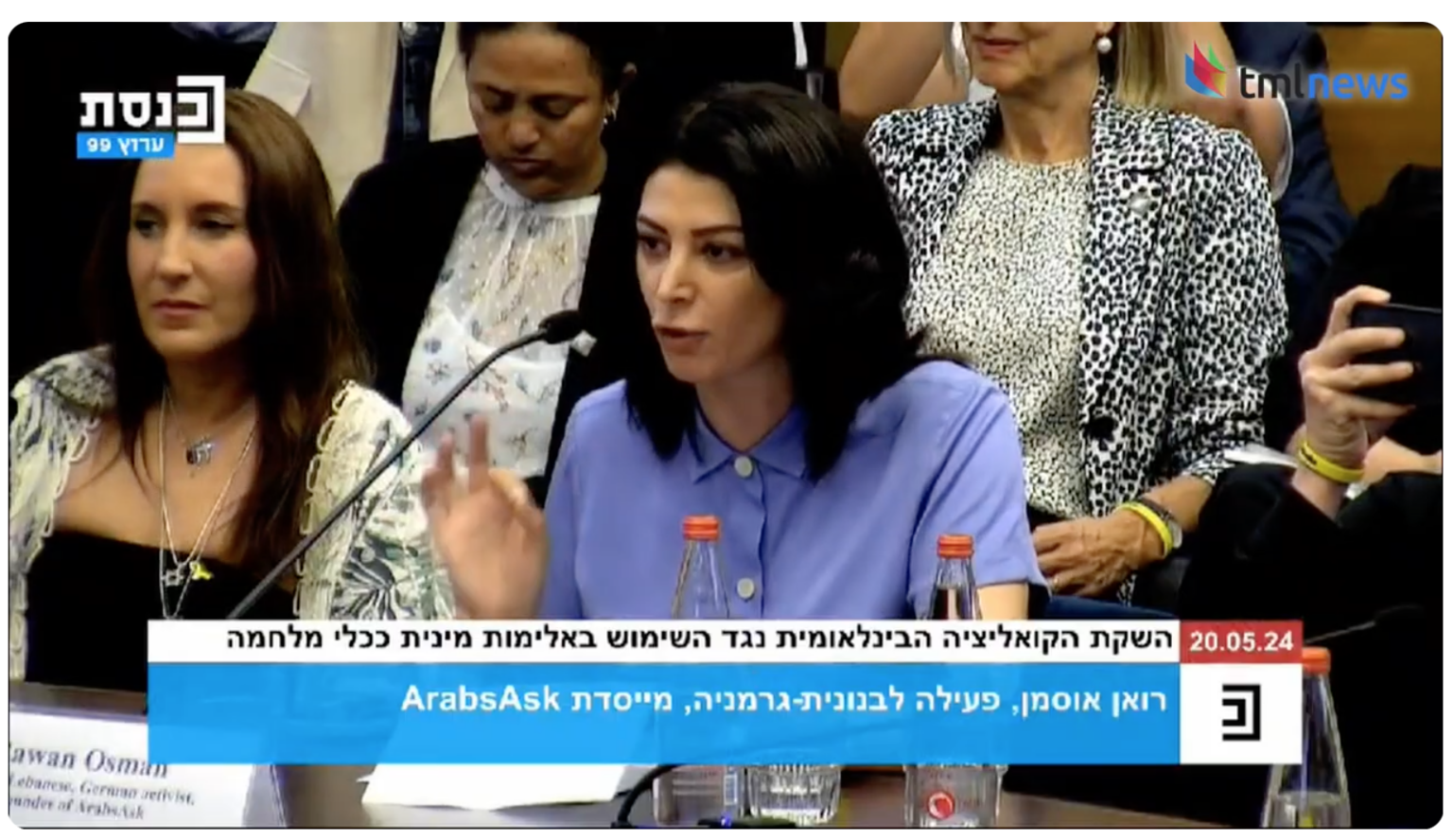
New coalitions. An 18-member delegation of women from 12 European countries, focused on gender-based violence as a weapon of war, held a session at the Knesset and launched an international coalition of women on the issue, and visited a Museum of Tolerance exhibition of women’s testimonies. Read the report.
Public positions taken. Members of that delegation publicly rejected the International Criminal Court prosecutor’s move to seek warrants against Israeli leaders alongside those of Hamas, describing it as a false equivalence. Read the coverage.
Parliamentary initiative. After returning from a delegation, the chair of Latvia’s Foreign Affairs Committee, Rihards Kols, initiated an inter-parliamentary conference together with ELNET examining the strategic implications of Iran-Russia cooperation.
Coverage at national level. ELNET recorded substantial press coverage in Italian outlets following the return of the ELNET-Italy delegation, and in influential outlets across Europe after the January 2024 pan-European mission — in both cases reporting what delegates had witnessed rather than the visit itself.
TestimonialsQuotations recorded during ELNET missions and reported at the time
“In all other conflicts, including in Ukraine and Bosnia, people believed women, but here they did not. And [this] even in the gender-strong liberal countries of Europe.”
Helena Ferro de Gouveia, Portuguese lecturer on gender violence, ELNET delegation, 2024
“If someone cannot condemn attacks on women, that is pure antisemitism.”
Élise Fajgeles, Secretary General of the French governmental agency addressing racism and antisemitism, ELNET delegation, 2024
Speaking at the close of the January 2024 pan-European mission, Lord Peter Mandelson described being astonished by the scale of what Hamas had done, and argued that the war differed from previous conflicts in Israel’s history in being ideological rather than territorial, and therefore a security question for the whole of the West. Read the mission report.
“We have 128 hostages, and especially the 17 women who are still held in Gaza. Today we are gathering as a global coalition.”
MK Shelly Tal Meron, opening the Knesset session held with the ELNET delegation, June 2024
Video HighlightsA short selection from ELNET’s video archive
The French solidarity mission to Israel, October 2023.
i24 News on the visit of former Prime Minister Manuel Valls.
Rihards Kols reflects on his ELNET visit to Israel.
David Siegel speaking at Kfar Aza.
How ELNET builds each delegation programme.
The full archive, including interviews recorded with delegates during later missions, is on the Video Highlights page.
Mission Reports and Related Work
Each Solidarity Mission was documented at the time. These reports are the primary sources for this page.
French Solidarity Mission, October 2023
Pan-European Solidarity Mission, October 2023
Sixteen more European parliamentarians, November 2023
ELNET-Italy’s first delegation, December 2023
First pan-European parliamentary delegation of 2024
Italian-British parliamentary mission, February 2024